Museum of early consumer electronics and 1st achievements
www.rewindmuseum.com
More vintage electronics devices.
Vintage test equipment is below followed by other intersting items.
21st April 1941. Western Electric CW-22266 test meter.
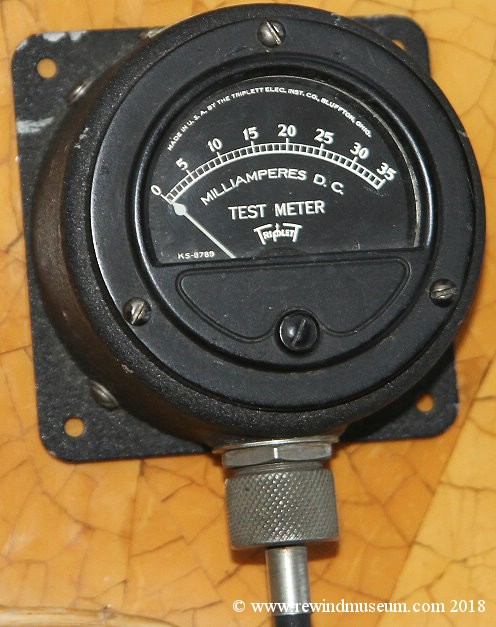
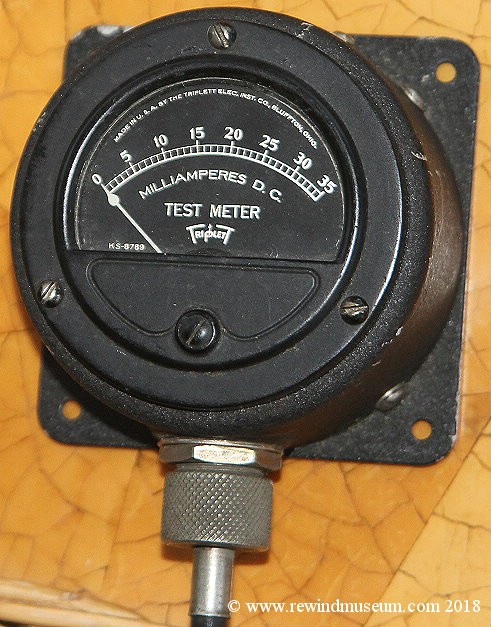
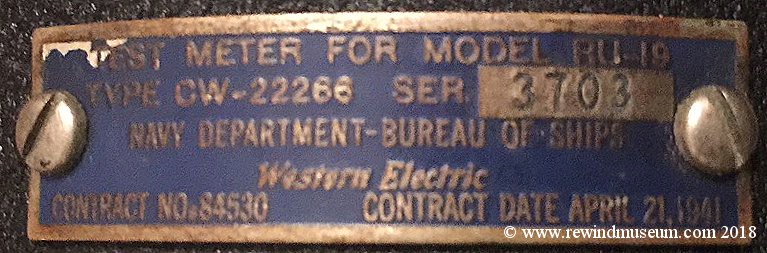
Supplied to the (US "Navy Department-Bureau Of Ships". Contract number 84530 Serial Number 3703 0-35 mA Test
Meter for Model RU-19 (which was a military aircraft radio). Made in the USA by the Triplett Elec, Inst, Co,
Bluffton Ohio. Triplett Corporation was founded in 1904 in Bluffton, Ohio by Ray L. Triplett. It was
manufactured for the Navy Department-Bureau Of Ships (procurement department) under contract just before
the US entered World War 2. Within a few months the US entered the war (7th Dec. 1941) and the
Navy Department-Bureau Of Ships massively increased it's 1940 order for military ships and other military
hardware. This meter came from Mr.
Charles Swift (junior) and since he was in - "RAF Ground Crew" in WW2,
I can only assume the US supplied the RAF with some of these meters during the war.

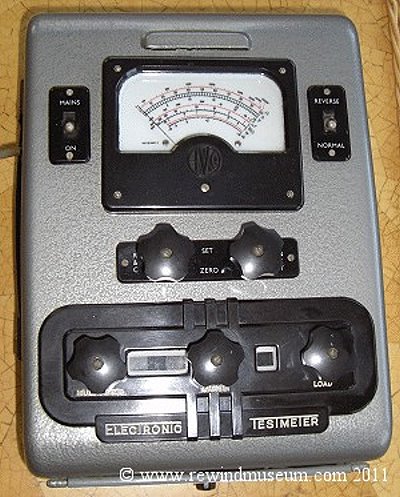
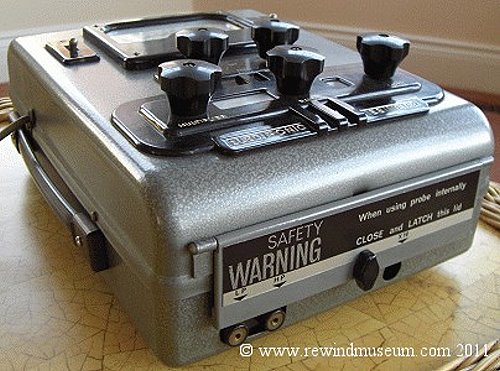
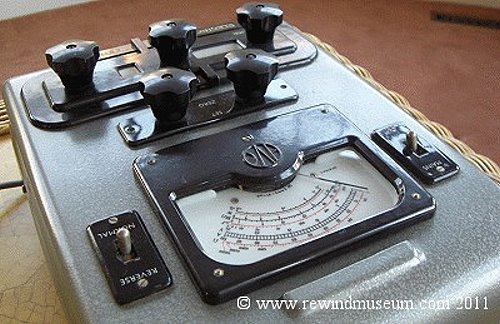
1951. AVO Type 1V Electronic test meter.
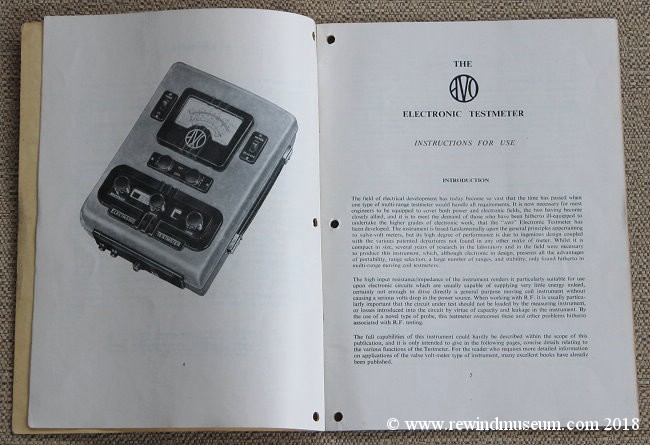
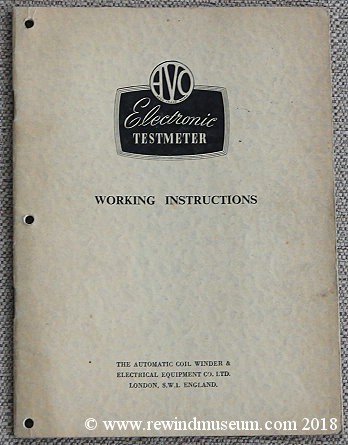
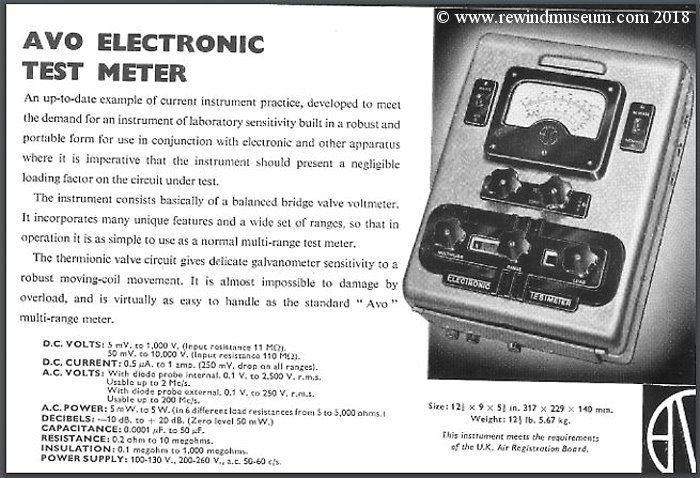
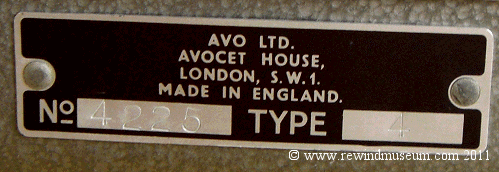
There is also an original manual. I bought this from a
friend in 1980. He was quite old at the time. He died in 2000.
This unit was made my AVO Ltd. London England. In those days it was called an electronic test meter. It is basically
a high quality valve voltmeter. Since it uses valves it has a high input impedance and so is very accurate. When
dating this meter I was not sure if it was 1950 or 1961 (based on several sources), however, I have learnt that
sometimes the last digits in a reference number usually on the back of a manual can signify the date. The manual
has a reference number on the back IM.4.51 and so it is reasonable to assume it was made in 1951.
1975. TMK TW-20S Multimeter.
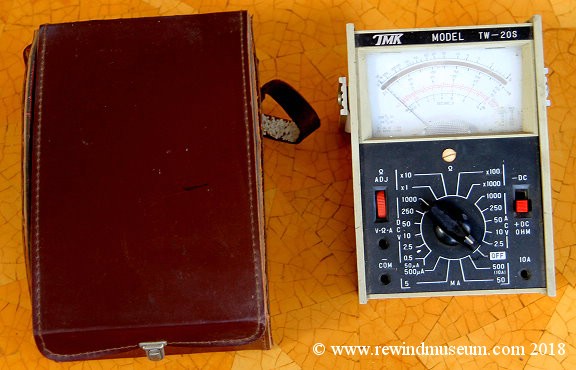
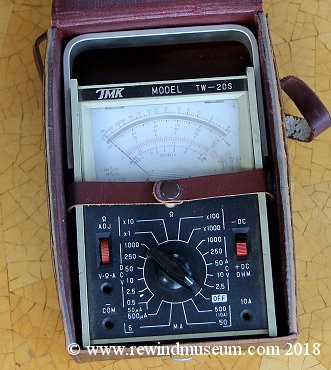
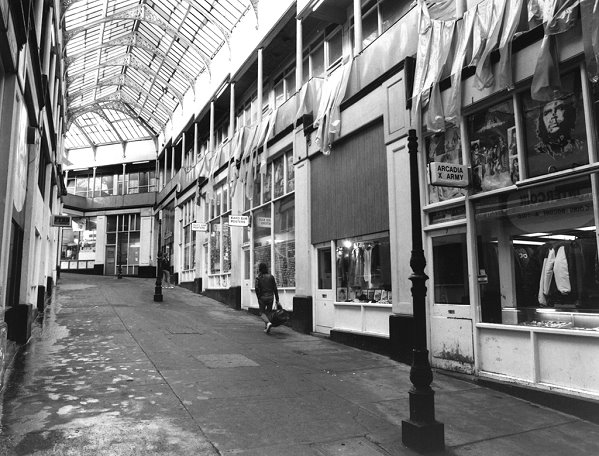
I bought this multimeter at an electrical trade wholesalers in "Handyside Arcade" in Newcastle Upon Tyne
for £10.00 in 1975. Handyside Arcade was built in 1906 and demolished in 1981. "JL Miller and Co.,
Electrical Wholesalers" disappeared at the same time. This is an excellent multimeter and has served
me well over the years. It came with an excellent leather case (case was an option - can't remember
how much the case cost). These days I use a digital multimeter but this one still works perfectly.
1936. Avo Valve Tester with Universal Panel.
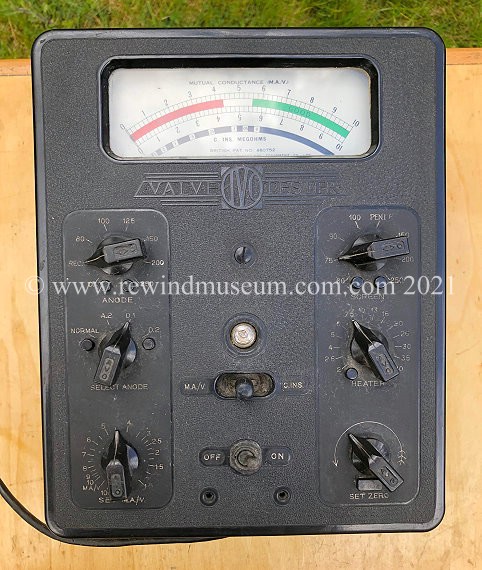
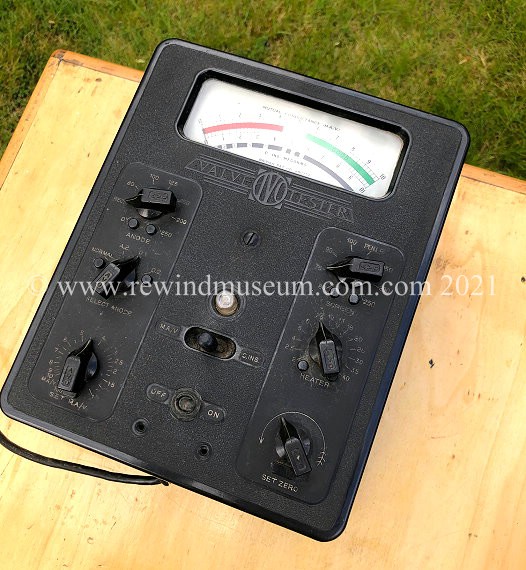
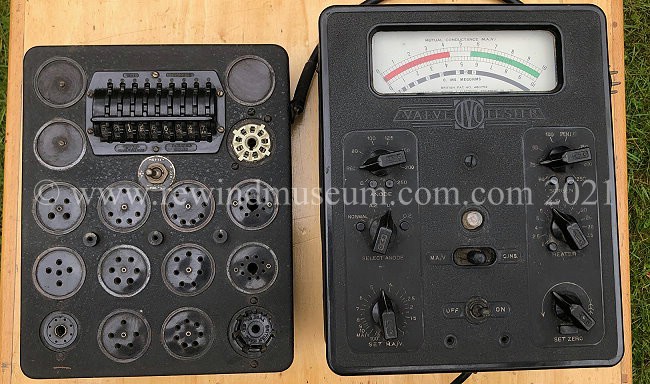
This is an early and important piece of test equipment. Many products on this site use valves and this
tester was used by service engineers to diagnose faults and repair equipment. In the museum we also
have the universal panel packaged with this tester. In 1939 an AVO advert for this equipment showed
a price of £12.60 including the panel. This was not the first valve tester but it was the first to
include a universal panel so that all valve bases and valve characteristics could be tested.
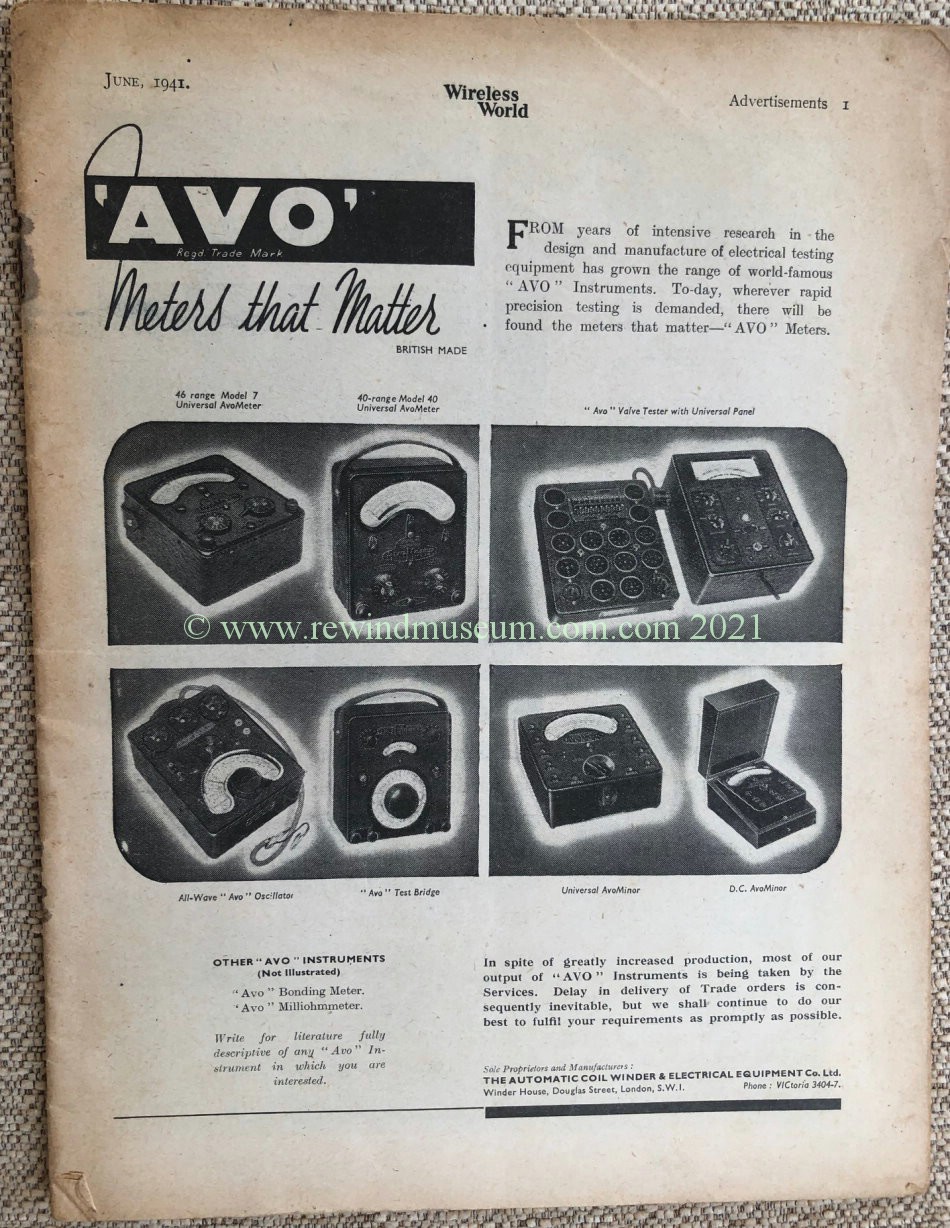
This tester was available for many years after the 1936 introduction and we have a "Wireless World"
magazine
below dated June 1941 which contains an AVO advert and includes this tester and panel.
Made in England by the Automatic Coil Winder & Electrical Equipment Co. Ltd.
1941. Avo Universal AvoMeter Model 7.
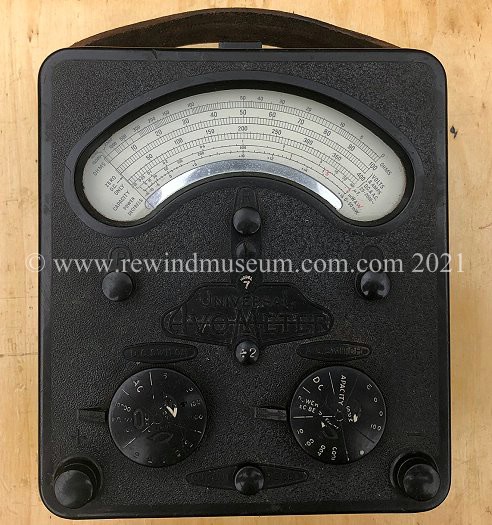
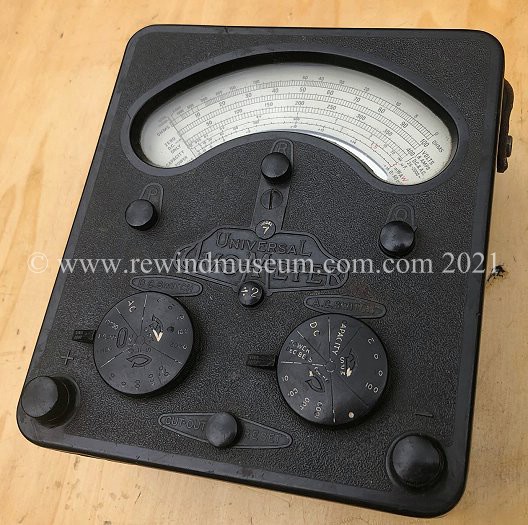
There are some sources which date this meter as 1948, however, the Model 7 Mk 2 was available in 1946
and this Model 7 (Mk1) was available much sooner. Another source puts a 1945 date on the Model 7 and
whilst it was available in 1945 again it was available earlier. In the museum we have a "Wireless World"
magazine dated June 1941 which includes an AvoMeter Model 7 advert. Clearly the meter was available
from 1941 until 1945 and the meter in the collection could have been manufactured at any time between
these two dates. The date we quote is always the earliest date we know a product was first manufactured.
This meter is a universal multimeter manufactured by the Automatic Coil Winder & Electrical Equipment
Company, Winder House, Douglas Street. London. England. The meter most older engineers may
remember is the Model 8 but it is good to have this earlier model in the museum.
Windsor Model 65C Signal Generator.
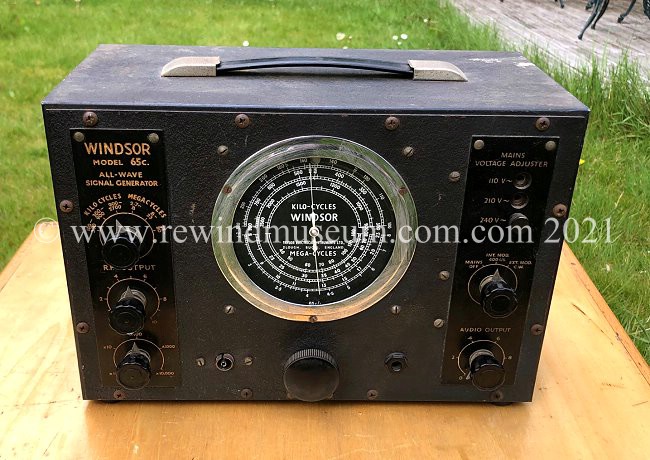
This is another early and important piece of test equipment.
A Signal Generator was used for testing TVs, radios and other electronic equipment. The Windsor 65B was
first manufactured in 1942 and advertised in 1948 and so the estimated date for the 65C which was almost
the same, could be 1942 to 1950 approx. It could have been manufactured at the same time maybe with
different options. Only guess work here. Made in England by Taylor Electrical Instruments Ltd. Slough, Dover.
Pre 1961. Radar Model 202 CRT Tester Reactivator.
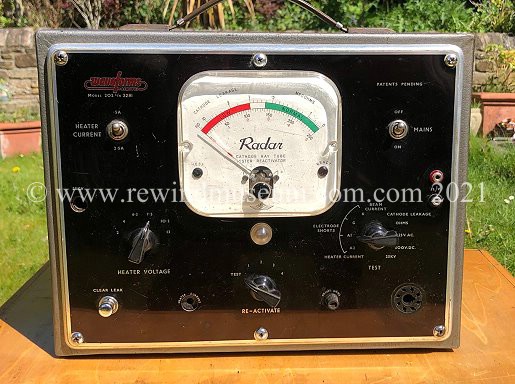
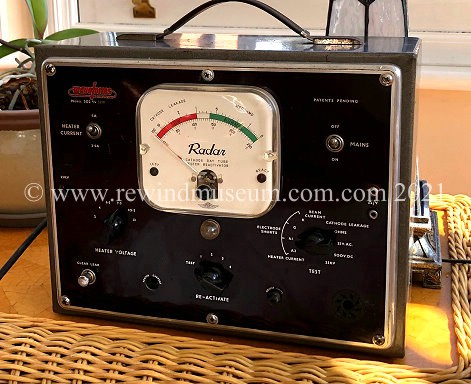
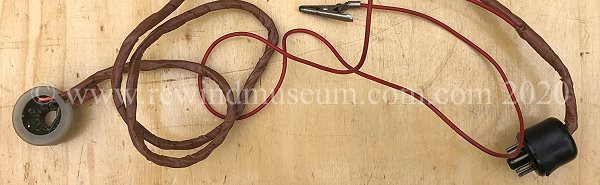
This Model 202 CRT tester was featured in the 1961 issue of "Television Receiver Servicing" magazine.
When a (in those days black and white) Cathode Ray Tube (CRT) started to fail, it was sometimes possible
to reactivate or rejuvenate it. Often the fault would manifest itself as "ballooning" of the picture. Reactivation
involves, briefly, increasing the heater current whilst, a positive potential is applied to the tube electrodes.
This effectively burns a new surface on the cathode to improve electron emissions. It is usually effective but may
only grab a few months of good picture performance. Since there was nothing to lose as the picture beforehand
would be very poor, whilst reactivation may not work, most people would take the risk and have the tube
reactivated. The meter to CRT connection lead is included with this unit.
Manufactured in England by Waveforms Ltd., Radar Works, Bournemouth.
1970s. Motion Electronics Television Sound Monitor.
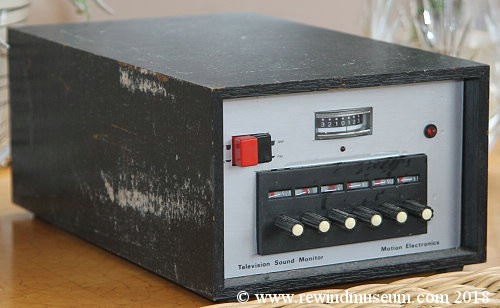
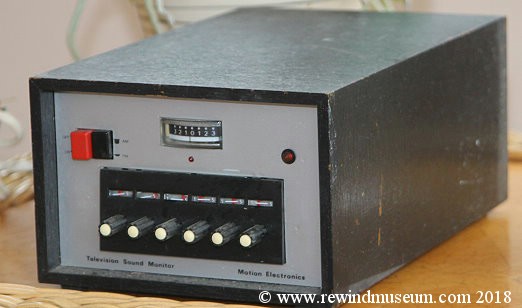
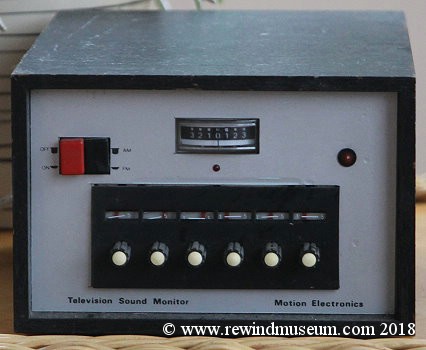
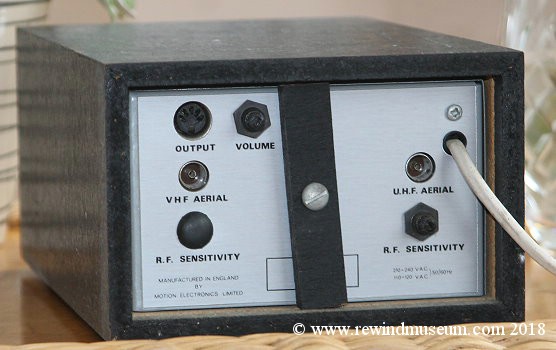
This unit was used regularly through the 1970s and 80s. It is a UHF (analogue) TV sound tuner and can be fed through
a HiFi system. TV sound was, and is, usually quite poor from a TV set and these days a sound bar tends
to be used. I used this unit through the
Rogers valve amplifier and a couple of speakers to improve
the TV sound. During the warranty period one of the (mechanical) buttons refused to stay in. I spoke
to Motion Electronics on the phone and it then was sent back to them and replaced. The unit came in
a wooden case but I painted it satin black to match the Rogers amp and other AV equipment.
Motion Electronics Ltd. from Gravesend Kent started trading in 1960 and ceased trading in 2003
Microphones from the 1960s and 70s.
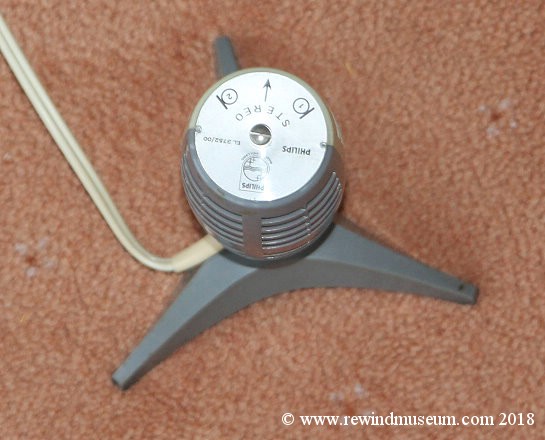
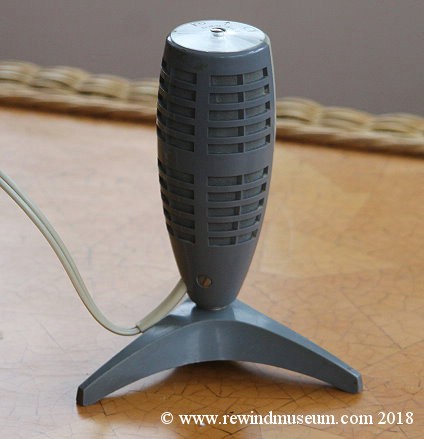
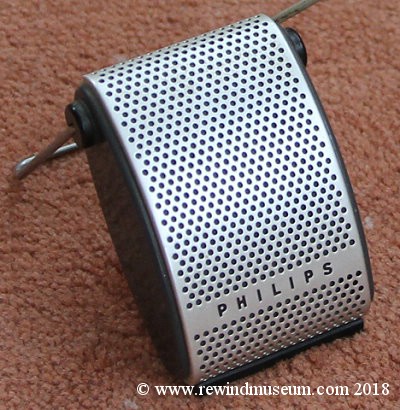
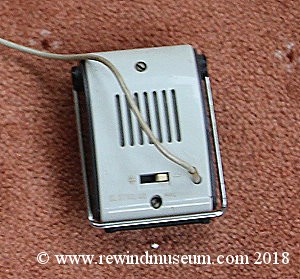
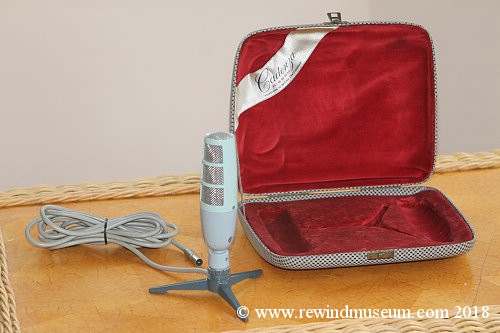
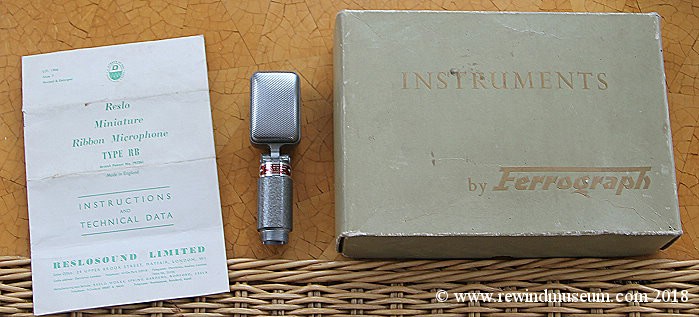
Philips Mike. EL3752/00. 1960. Top pictures. Dynamic mike. Price new $39 in the USA. It could have been used
with the Philips
EL3400 VRT. Cadenza Mike 3rd pictures from top in red lined box. 1050s. Made by Simon
SoundService Ltd in London, They made the
Simon tape recorder. This Mike was designed by Eric Tomson,
Stanley Kelly Peter Bell. Ferrograph Reslo Mike. 1970s. For use with the range of Ferrograph reel to reel tape
recorders (bottom picture). I visited the Ferrograph factory in South Shields, North East England in 1979.
They were making their very last Reel To Reel recorder, The Studio 8, considered by many to be the best by far.
They were also making the Neal (North East Audio Ltd) cassette recorder as NEAL had merged in 1977. The
company went into receivership in 1981. This large factory used to have 300 workers, however, when I
visited I only saw a handful of people. The large factory was mostly empty and there were 2 production
lines for the Studio 8 and NEAL cassette deck. They took up a small amount of the available space.
I guess by 1979 the writing was in the wall. Also see
HiFi Sound magazine from Feb. 1970.
These microphones came from Mr.
Charles Swift (junior).
Audio Mixers.
1960s Grundig 4 Channel Audio Mixer.
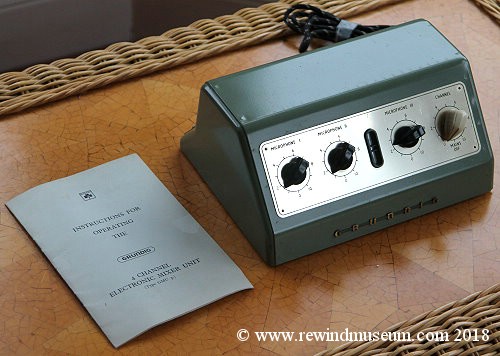
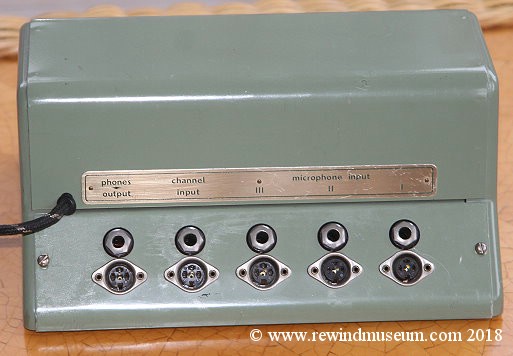
Grundig 4 Channel Electronic Mixer Unit. Heavy. Built like a tank.
This mixer came from Mr
Charles Swift (junior).
1970s Maplin Pro-Sound M7000VX Audio Mixer.
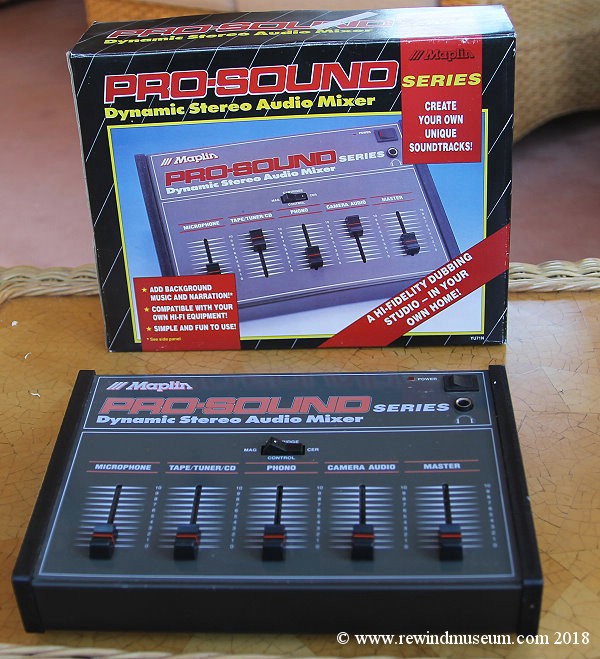
Contrast the Grundig audio mixer above with this one. I must have bought this one in the 1970s from Maplin.
Check out the
Maplin Catalogues from 1979-94
1964. June 64 issue of Practical Wireless. Audio Mixer Project.
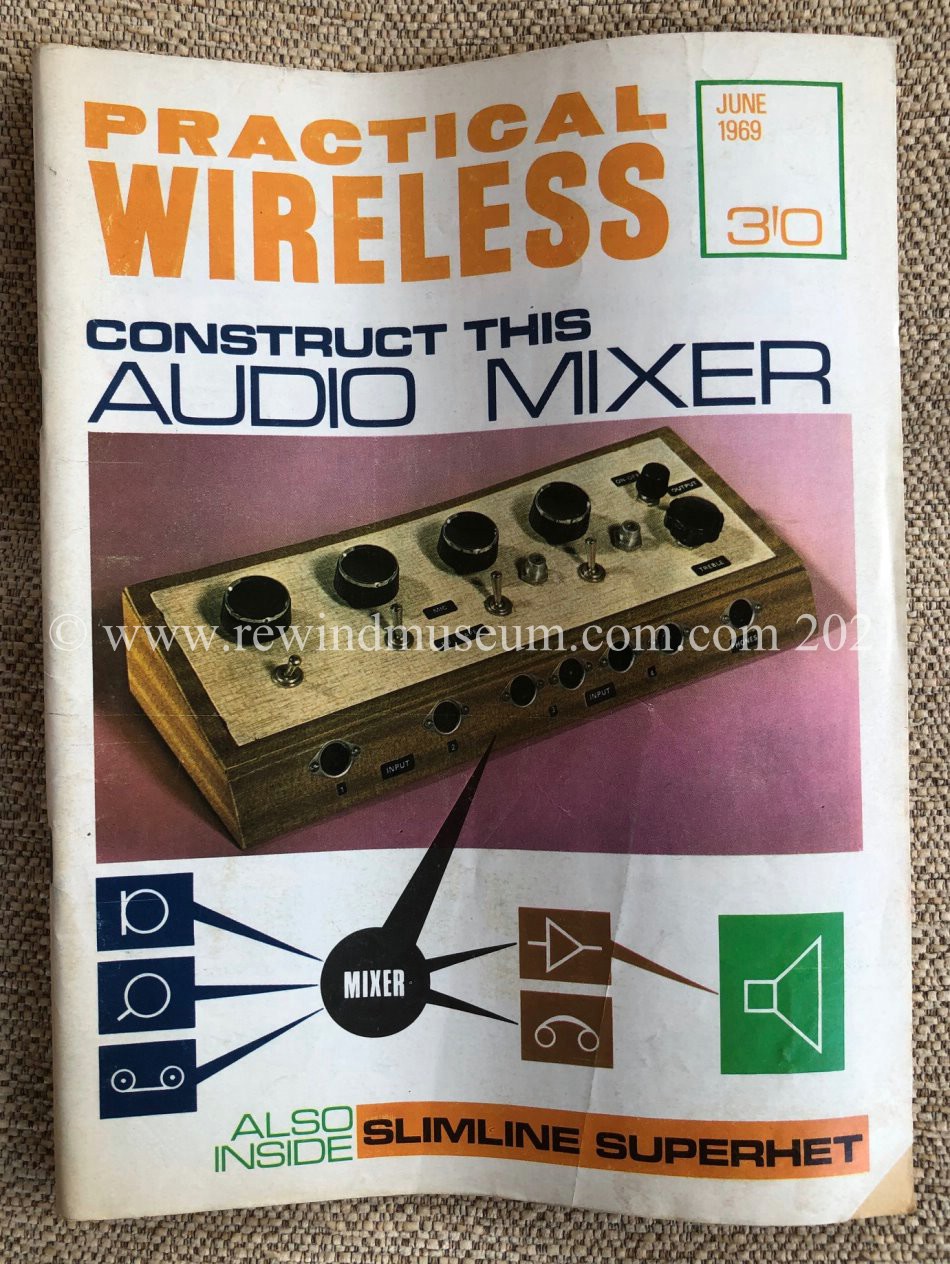
Since we have a couple of audio mixers in the museum (above) i though this magazine was particularly
interesting. The reason is that when I was in the 6th Form at school in 1969 we built this mixer.
When I say we, I mean myself and three other 6th form friends. We built it in the Physics labs in our
spare time and it was used for stage productions in our school. I was always interested in electronics.
1929? Ericson BBC 2000w headphones.
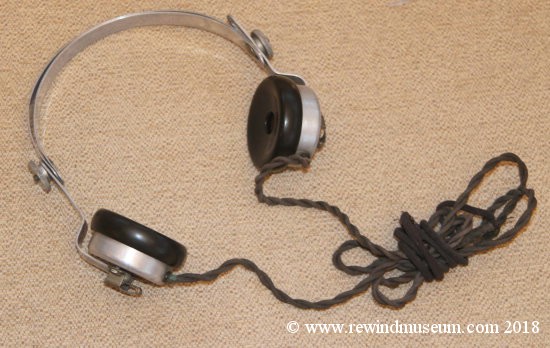
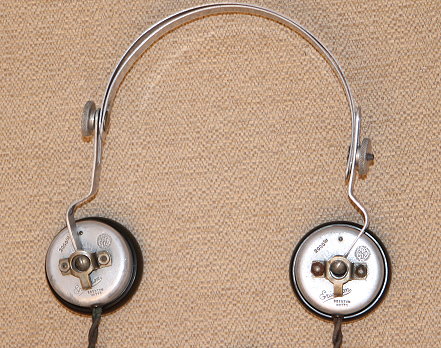
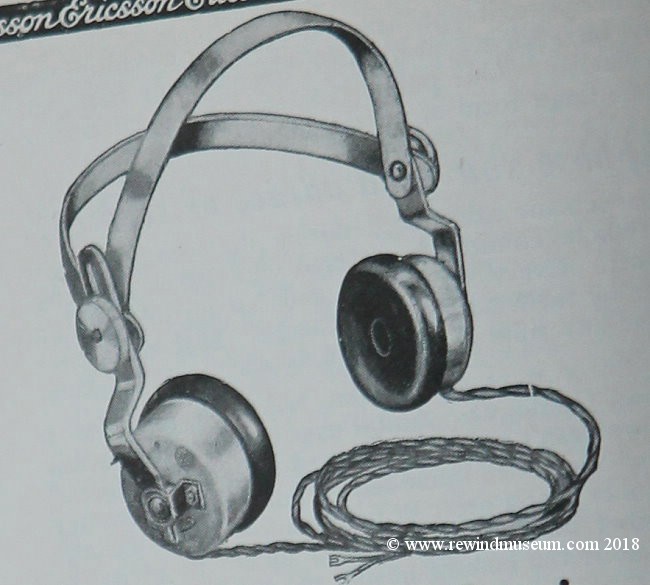
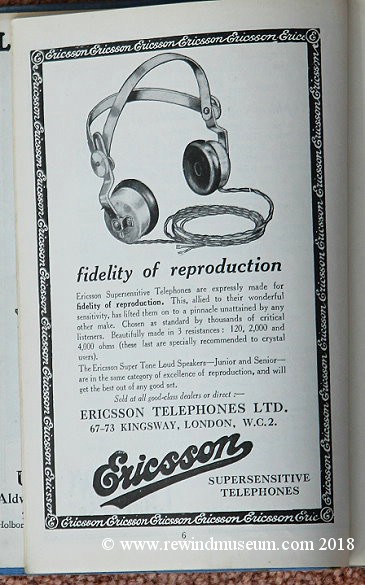
This advert is taken from the
BBC Hand Book 1929. The picture looks exactly the same as the headphones in the museum.
It is possible these museum headphones were made for a number of years.
Maybe as many as 10 years and so they could be from the 1930s
Also check out
Successful Wireless Reception 1926. The picture on the front looks very much like these headphones.
BRITISH L.M. ERICSSON MANUFACTURING CO., Ltd were a massive company in the 1930s and 40s with thousands
of workers. The made telephones for the National Telephone Co., Ltd. They made these headphones.
They were approved for use by the BBC. In WW2 they made shell fuses, field telephones, bomb sights,
telephone exchanges and radar sets. These headphones came from Mr.
Charles Swift (junior).
1973-77. Sinclair Cambridge Calculator.
The first Sinclair calculator was the Sinclair Cambridge. There were 4 types.
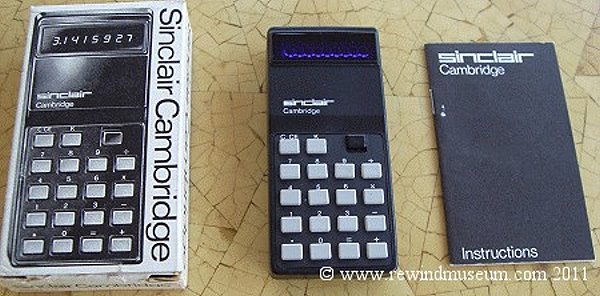
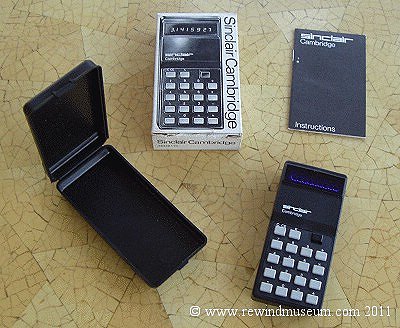
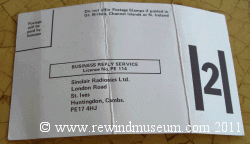
The type 1 was from 1973. This is a Cambridge type 3 probably from 1975.
It is complete and perfect in original box and instructions.
This page also includes some vintage still cameras.
1935 / 37. "VP Twin." camera"
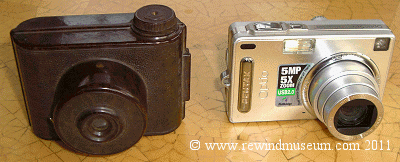
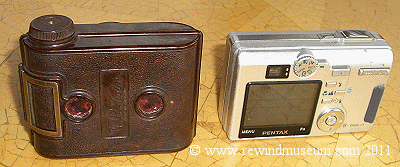
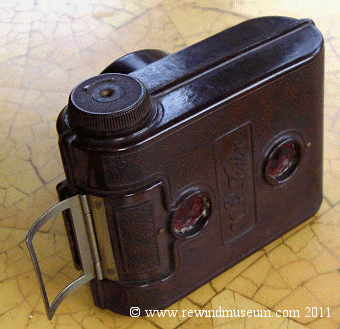
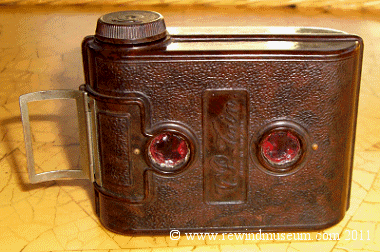
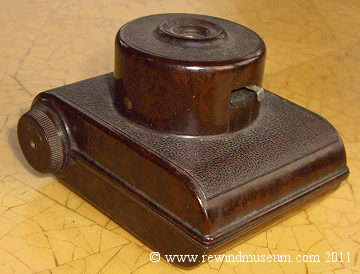
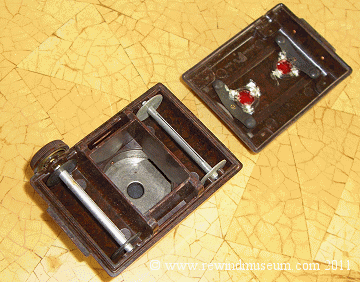
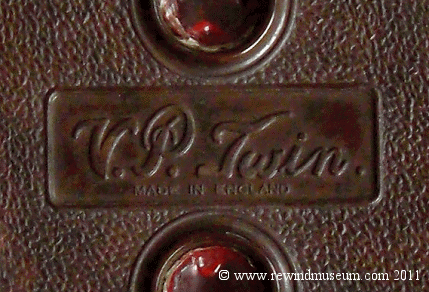
VP Twin - so called because it took two photo's per frame on vp film
All of the notes about this camera are in the letter at the bottom of the page
but here also are a few details. (A modern small digital camera is included to show how small it is.)
Like the Sony CVC-2000 (1st domestic video camera) from 1965. this camera used a hinge out
metal frame view finder. The camera was donated to the museum by Martin Bloodworth who bought
the camera for one shilling and six pence from "Woolworths" stores in 1936. Like the pound stores
(or dollar) stores of today, nothing was sold in Woolworths in 1936 that was over 6 pence.
(Six pence is 2 & 1/2 new pence (UK) or 5 cents (US) - One Shilling and six pence is 7 & 1/2
new pence (UK) or 15 cents (US)). To get round the six pence max. problem, Woolworths
sold it in 3 parts! (It was purchased from Guildford High street branch. UK)
The VP Twin camera was a Bakelite camera. It used 127 rollfilm to give 16 exposures.
Each exposure was 5/8" x 1¼". It was manufactured by E. Elliott Limited in Birmingham UK.
The Woolworths web site also details this camera and mentions that a film with developing
was 7d. i.e seven (old) pence (about 3 new pence (UK) or 6 cents (US)) They also say
that it was sold in the 1930s.
There were later models but this one is the Mk1, first ever, VP Twin camera. They were
either black or coloured. This one is brown. No idea if any other colours were available
but the coloured models are the most rare and sought after by museums and collectors.
Check out the
important letter which came with this camera
below.
1952 - 59. Kodak Brownie 127 camera.
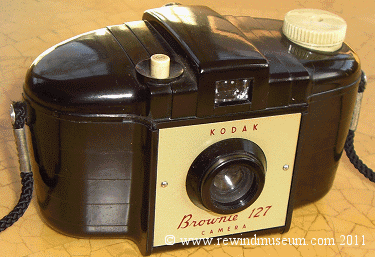
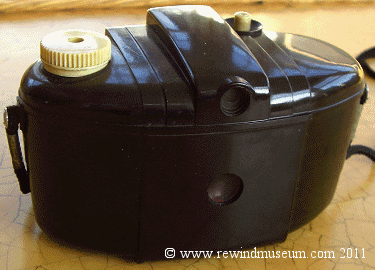
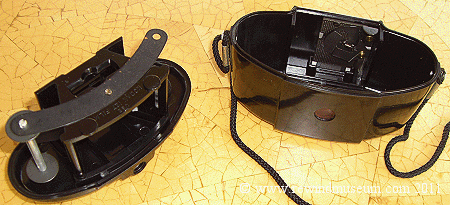
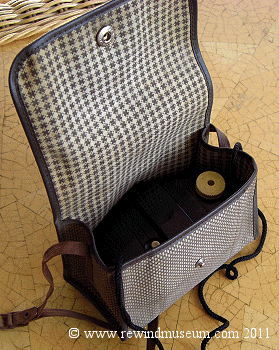
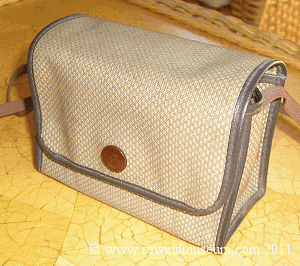
This was my first camera. I did not buy it, it was given to me when I was a boy. Not sure if
it was new, or handed down but it would have been mid. to late 1950s. I used the camera at
that time and it produced good results. It came with an original case and I also have the
original box and an original Kodak 127 film (pictures of these will be added to the site soon.)
The camera is made of Bakelite. Millions of these 127 Mk 1 cameras were made between 1952
and 1959. Kodak introduced the 127 film in 1912 and it continued to be produced until the
late 1960s. The picture size was 1 & 5/8 X 2 & 1/2 inches. It was manufactured in the UK
but some were exported to America where it first sold for about $5.00 The lens was an
f/14, 65mm and shutter speed 1/50s. Even by 1954 over 1,000,000 had been sold.
1960 / 65. Minetta Camera
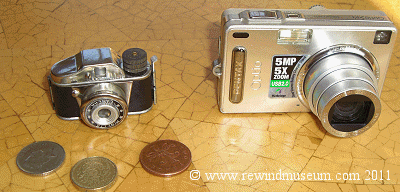
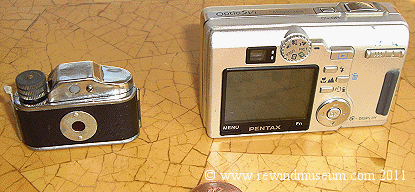
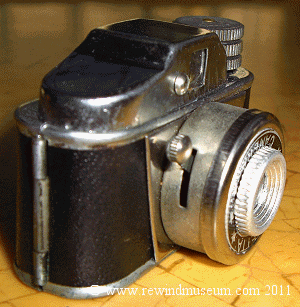
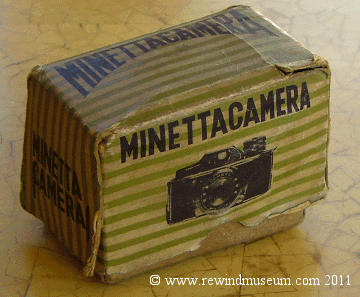
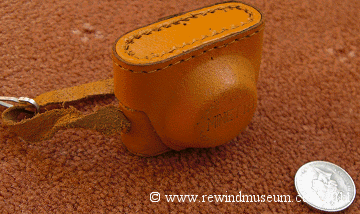
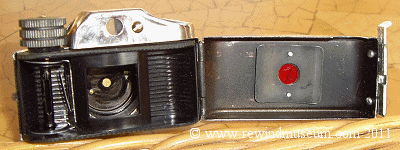
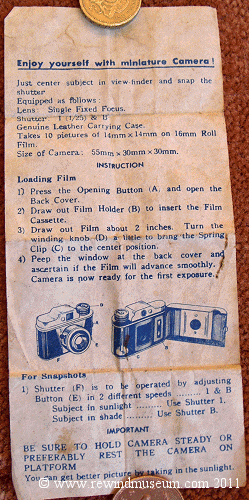
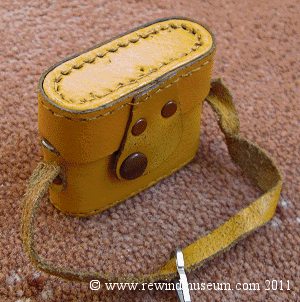
I bought this camera from new, a shop in Gateshead (UK) when I was young. Probably I was about
12 or 13 years old. This would make it 1964 or 1965 approx. Other web sites put the camera at
about 1960 or early 60s and so the date will be close to that estimate. I was taken with it's
small size. Unfortunately I cannot remember how much I paid for it. Maybe about 40p (80 cents US)
in todays money (maybe about seven shilling and sixpence) but not sure. Kept it all these years
and now it is included here. There is a fare amount in information about this camera on the web.
It was produced and badged under a number of different brand names.
The Minetta camera is called a (HIT type) subminature camera. It was made in Japan around 1960.
It takes 17.5mm film which produces a 14x14mm image.
From the instructions above we see it had 2 shutter speeds and the film took 10 pictures.
1972. Polaroid Super Swinger camera.
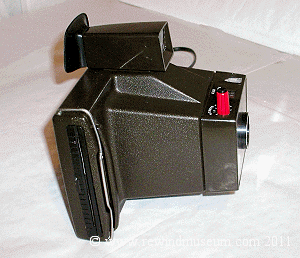
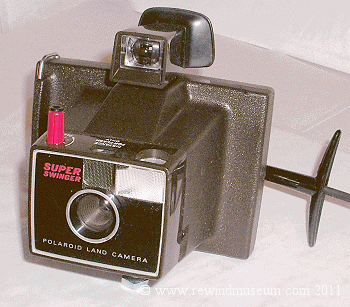
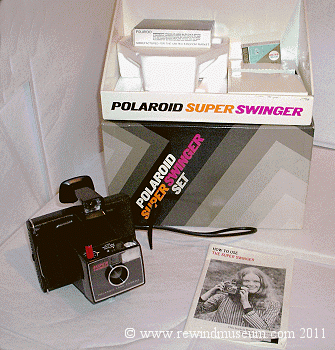
This camera was donated to the museum in 2004. It is boxed and complete.
This type of camera prints a picture while you wait.
1995 Vintage GSE MPS 2000 Pro editing stand alone
"Multi Production Editor" video editing system.
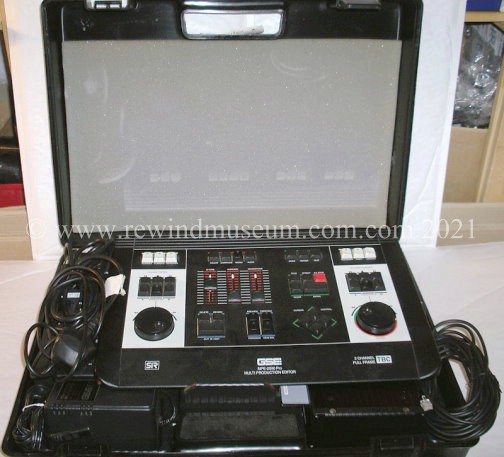
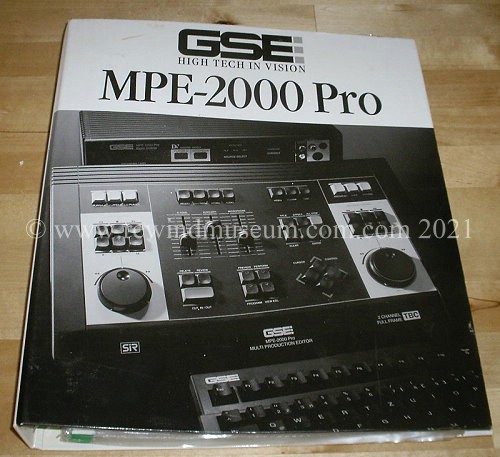
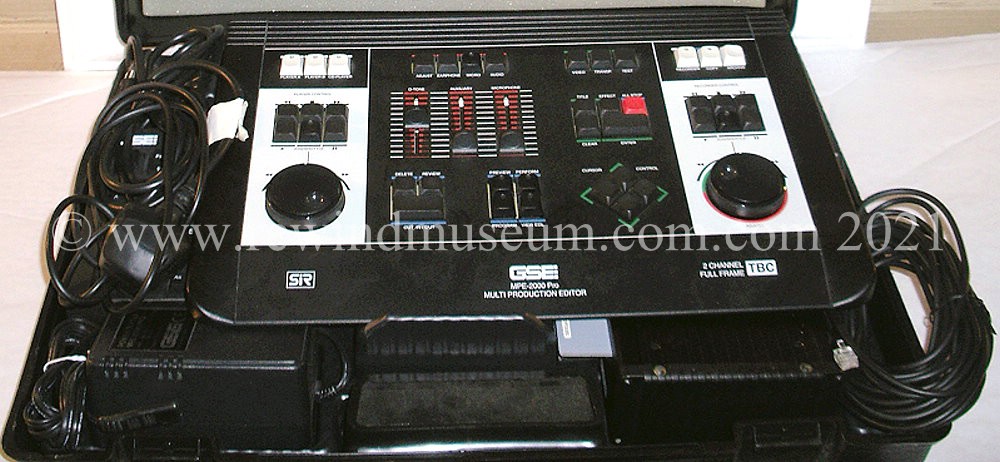
An integrated editing table, audio and video mixer, effects processor, titler and corrector
Developed by GSE (General Systems Electronics (GmbH) It cost 2424 Euros in 1996.
Pinhole camera and ejector seats.
This letter was sent to us with the "
VP Twin" Camera above and was so interesting it is included for you to read.
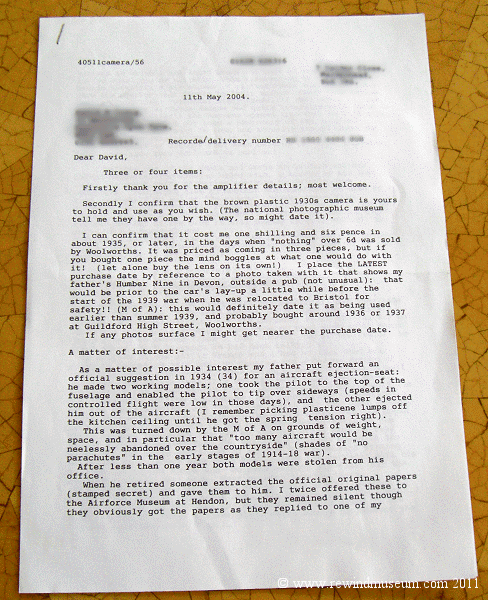
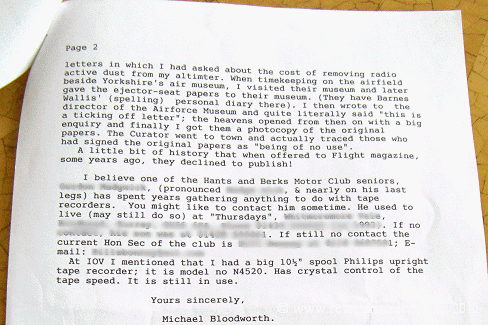 Who really invented the ejector seat used in aircraft?
 Making a donation.
The Rewind Museum is a non-profit making endeavour. The web site and the touring exhibitions are run on
a voluntary basis. Donations,
not money, just old items you no longer want, are always welcome.
If you have something that you think would be of interest, please contact us with the details.
We can send in a courier to pick them up. (Even an international courier). Thank you.
Please note - The Rewind Museum site has been archived by the British
Library so that future generations can always access the site's content.
To talk to us about making a donation please go to - "
making a donation".
Are you interested to read about a 10 year + restoration of a classic vehicle?
If so go to -
www.1952chevytruck.com
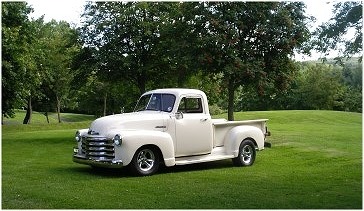 The 1952 The 1952 Chevy truck web site.
Web site copyright © 2018 Vision International. All rights reserved.
For all questions & comments about this site's content contact Dave at Rewind Museum.